Stop Hiring Sales Managers. Start Hiring Force Multipliers.
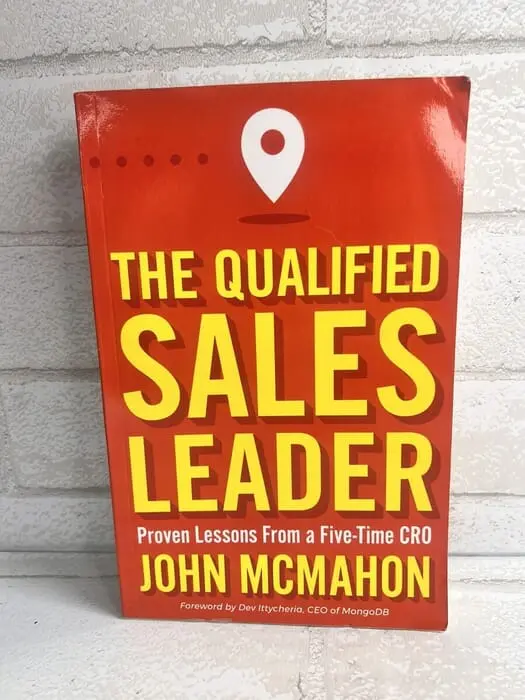
What if your sales leader was your single greatest competitive advantage? Not just a supervisor, but a strategic weapon who could de-risk your forecast, slash ramp time for new hires, and consistently extract maximum performance from the team. This isn't a fantasy. Based on the hard-won wisdom of sales legend John McMahon, we've decoded the essential DNA of a qualified sales leader. Read on to learn the framework that separates the best from the rest.
--------------------------------------------
The Core Philosophy: A "Player-Coach" who is a "Force Multiplier"
McMahon doesn't believe in managers who just oversee and report. A qualified sales leader is a hands-on "player-coach" who actively develops reps and a "force multiplier" who systematically improves the entire sales process to make the entire team more effective.
The 5 Key Qualities of a Qualified Sales Leader
1. They are a QUALITY HIRING MANAGER
-
Hires for Attitude & Aptitude, Not Just Resume: They look for coachable, curious, and resilient individuals, not just those with a big Rolodex.
-
Uses a Scorecard: They have a clear, measurable profile for the ideal rep (based on the traits of their top performers) and use a structured interview process to grade candidates against it. They don't hire on "gut feeling."
-
Seeks Problem-Solvers: They prioritize candidates who can articulate how they solved problems, not just what they sold.
2. They are a SKILLED FORECASTER
-
Uses a Rigorous Process: Their forecast isn't based on reps' optimism or a "commit call." It's based on tangible evidence tied to their sales methodology.
-
Inspects, Doesn't Just Expect: They validate the forecast by personally reviewing key deals, asking probing questions about the customer's pain, budget, authority, and timeline.
-
Focuses on "Validated Pain": They know a deal isn't real unless the sales rep can prove the customer has a measurable, funded pain that your product can solve.
3. They are an EFFECTIVE ON-THE-JOB COACH
-
Coaches in Real-Time: Coaching isn't a quarterly event. It happens in deal reviews, before and after important calls, and during pipeline inspections.
-
Focuses on Behavior, Not Just Outcome: Instead of just asking "Did you win?," they ask "What questions did you ask to uncover the economic buyer?" They focus on improving the activities that lead to wins.
-
Leverages a Sales Process/Methodology: Their coaching is grounded in a framework like MEDDPICC (which McMahon heavily popularized) or a similar qualification methodology. This provides a common language and a objective standard for coaching.
4. They are a PROCESS & METRICS FANATIC
-
Manages Leading Indicators: They track activity metrics (e.g., number of discovery calls, meetings with economic buyers) that lead to results, not just lagging indicators like closed revenue.
-
Identifies and Fixes Process Leaks: They constantly analyze the sales funnel to find where deals are getting stuck or lost (e.g., "We lose 50% of deals after the demo") and create training or process to fix that specific "leak."
-
Uses Data to Drive Decisions: Their decisions on hiring, comp plans, and strategy are informed by data, not just anecdotes.
5. They RETAIN TOP TALENT
-
Creates a Culture of Winning and Development: Top performers stay because they are challenged, developed, and part of a winning team.
-
Is Fair and Transparent: They are clear about expectations, comp, and career paths. Reps trust them because the process is consistent and fair.
-
Fights for Their Team: They protect the team from internal politics and secure the resources needed for them to succeed.
In a Nutshell: How to Spot One
A qualified sales leader, according to John McMahon, can immediately articulate:
-
Their Hiring Scorecard: What specific traits they look for in a rep.
-
Their Sales Process/Methodology: The specific framework (like MEDDPICC) they use to qualify deals and coach reps.
-
Their Team's Metrics: The key leading and lagging indicators for their team, and where the biggest "leak" in their funnel is right now.
If a sales leader candidate can't do these three things, they are likely an "order taker" or "report watcher," not the strategic force multiplier McMahon defines as "qualified."